The Wall Has Opinions: Hanging Art in Colchester Without Losing Your Deposit
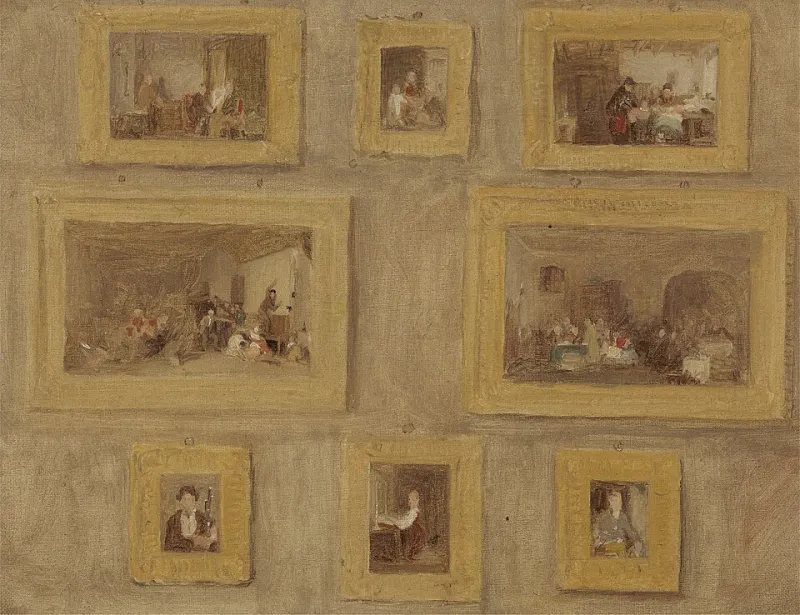
Photo: David Wilkie, Public domain, via Wikimedia Commons
Buying a piece of local art is the easy part. Getting it onto the wall — without cracking lime plaster, losing a deposit or discovering that the only available wall faces north and receives roughly four minutes of direct sun a year — is where the real Colchester conversation begins.
Our town has an unusually awkward housing stock for hanging pictures. The Dutch Quarter and New Town are full of Victorian terraces with picture rails, chimneys and plaster that has been painted over approximately forty times. Lexden and Prettygate have solid 1930s semis with walls that will take a masonry bit but might object to a heavy frame. Stanway and Chesterwell have new-build stud walls that sound hollow when you knock and mean it. And plenty of us are renting a flat in the Hythe or the town centre, where the phrase “just put a nail in it” is not a strategy but a resignation letter.
So here is a friendlier way through it, with advice that local framers, gallerists and artists tend to repeat once you get them talking about walls.
First, ask the wall what it is made of
Before you choose a hook, choose a wall. In a Victorian terrace, tap along the wall. A dull, solid thud may mean brick or lath and plaster; a lighter, papery sound often means modern plasterboard over something older. Lime plaster is beautiful and forgiving until you drill it badly, at which point a small hole becomes a small crater. Use a sharp bit, low speed, and no hammer action unless you are certain of what is behind it.
In a 1930s semi, the walls are often solid but the plaster can be tired. Avoid hanging anything heavy above a chimney breast if you can see hairline cracks, and never assume the chimney breast is flat — it rarely is. A framer’s trick is to hang on two hooks rather than one, so the weight is shared and the frame sits closer to the wall.
New-build walls are a different sport. Dot-and-dab plasterboard will hold a light frame on a proper hollow-wall anchor, but heavy pieces should go into a stud or stand on a picture shelf. If you are renting, check your tenancy agreement before you buy the drill. Many landlords are fine with small picture hooks if you fill and paint afterwards; get that in writing, even if it is just an email.
The renter’s kit that actually works
The removable adhesive hook has improved enormously, but it is not magic. Clean the wall with a little rubbing alcohol, let it dry, press the strip on firmly for the full recommended time, and halve the stated weight limit if the wall is textured, painted with washable paint or slightly dusty. Do not hang anything precious above a bed, a radiator or a doorway where a coat sleeve will catch it.
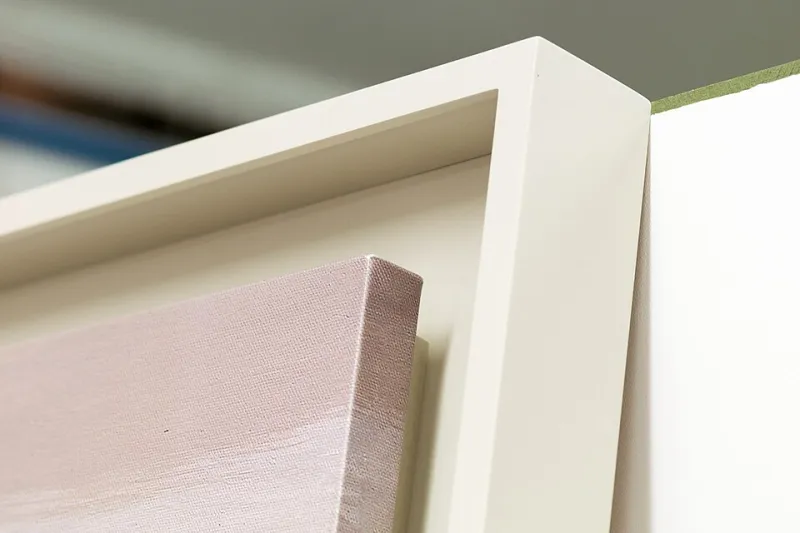
For heavier work in a rental, a picture shelf or a slim floor-standing easel is not a compromise — it is often the better look. Leaning a frame on a deep shelf, with a couple of museum putty pads underneath to stop it sliding, reads as deliberate rather than temporary. In a small Colchester flat, it also means you can change the display without touching the wall.
A basic kit: a spirit level, a tape measure, two brass picture-rail hooks if you have a rail, proper hanging cord or wire, D-rings for the frame, a pencil, and a small pot of filler for the day you leave. The filler matters. So does taking a photo of the wall before you hang anything, so you know exactly what you are returning to.
Picture rails are a gift, not a decoration
If you live in one of Colchester’s older terraces, there is a decent chance you have a picture rail near the ceiling. Use it. Proper brass picture-rail hooks cost very little and let you hang work on cord without making a single new hole. They also make swapping art easy, which matters if you get bored of looking at the same thing or if you are building a collection slowly.
Do not bend nails over the rail. It looks improvised, it marks the moulding, and it will eventually give way. Score carefully around painted-over rails before you slide a hook on, and use two hooks per picture for stability. The cord should form a shallow V, not a tight triangle; the frame will sit flatter against the wall and the rail will take the strain more evenly.
The north-facing problem
Colchester light is not neutral. North-facing rooms give a soft, cool, steady light that is lovely for some works on paper and slightly unforgiving for warm oils and rich watercolours, which can look grey by mid-afternoon. South-facing rooms are brighter but will fade textiles and works on paper over time. West-facing rooms get that late, low glare that makes glazing look like a mirror.
The practical answer is rotation. Do not leave a delicate work in direct sun for years. Ask your framer about UV glazing if the piece matters to you. Keep art off walls directly above radiators, where heat and dry air do quiet damage, and think twice about bathrooms and kitchens, where steam is not a friend to paper or canvas. A north wall is perfectly good for a rotating display; it is just not the place to park a favourite watercolour for a decade.
Scale, small rooms and the salon wall
In a small room, one confident piece usually works better than five nervous ones. Hang the centre of the picture at roughly eye level — around 145 to 150 centimetres from the floor — though Victorian rooms with high ceilings can take a slightly higher line. Above a sofa, leave a gap of about 15 to 25 centimetres so the art and furniture feel related rather than stranded.
If you have a collection and a narrow hallway, a salon hang can be brilliant: dense, layered, slightly unruly, very Colchester. Cut paper templates to the size of each frame and tape them to the wall first. It takes twenty minutes and saves an afternoon of regret.
When to call in a framer
Heavy glazing, deep box frames, valuable work and anything you would be upset to see on the floor are worth a conversation with an independent framer. They can advise on D-rings, security hooks and the right cord for the weight. They will also tell you honestly if the frame is too heavy for the wall you have in mind — which is cheaper than finding out at 2am.
A short checklist before you make a hole
Do you have permission? Do you know what the wall is made of? Have you checked the weight of the frame, not just the artwork? Is the wall in direct sun, above a radiator or in a damp corner? Are you hanging at the right height for the room? Have you used two hooks rather than one? And have you put the filler somewhere you will actually find it?
Art is meant to be lived with, not stored in a cupboard because the wall seemed too difficult. Start with one wall, one picture and a spirit level. Colchester’s houses are awkward, but they are not hostile — and a picture rail, a decent adhesive strip and a little patience will get you a long way.