The Kindest Room in Colchester: What Happens at an Artist Crit Night

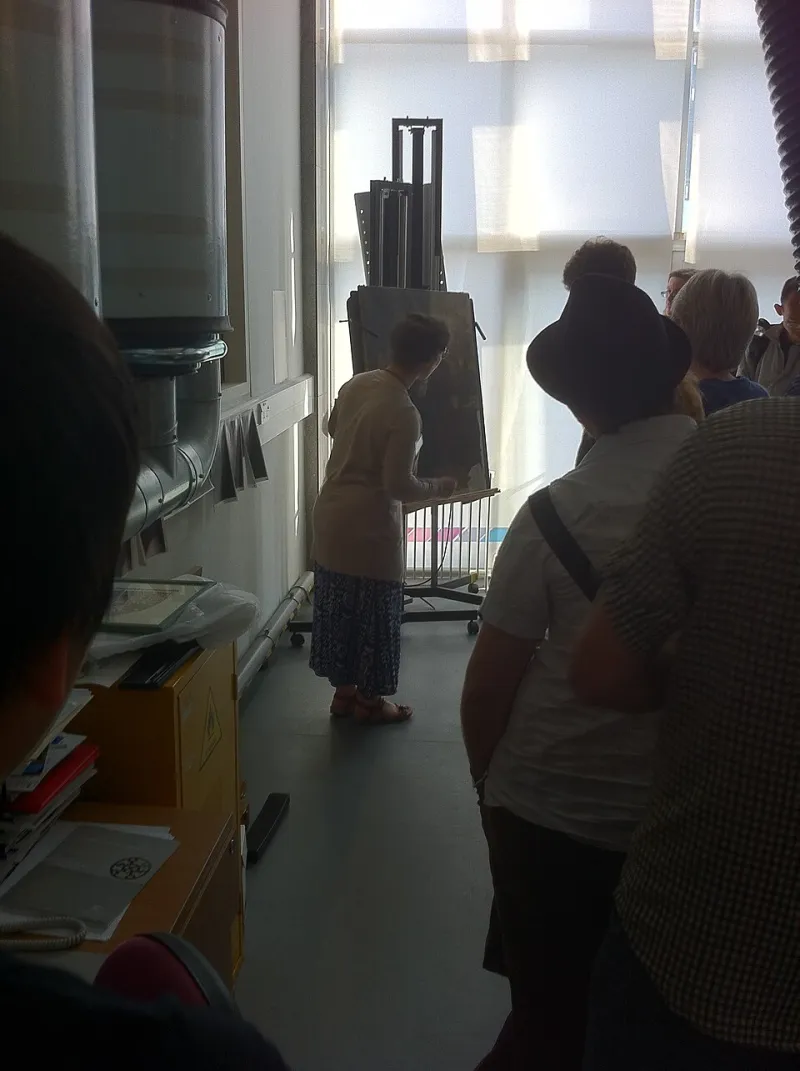
There is a particular kind of silence that fills a room when an artist lifts a half-finished canvas onto an easel and says, “I’m not sure about this one.” It is not the silence of judgement. It is the silence of people looking properly. On a damp November evening in 2026, in a side room off one of Colchester’s busy central streets, that silence is doing quiet, useful work.
This is a crit night — short for critique, though nobody here seems keen on the word’s sharper edges. Six artists have gathered around a mismatched collection of chairs and tables. There are biscuits. There is a Thermos. There is a painting that is still wet in places, a sketchbook spread open at a drawing that has been rubbed out and redrawn three times, and a small sculpture that looks, depending on where you stand, either like a seed pod or a very tired hedgehog.
Not a tribunal, more of a workshop
The format is simple. Each artist gets around twenty minutes. They put their work up, say what stage it is at, and explain what they are uncertain about. Then the room asks questions. Nobody is allowed to begin with “You should…” — at least, that is the house rule, and it is gently enforced by the person holding the biscuit tin.
Instead, the prompts are softer and, somehow, more demanding. What were you trying to get at here? What feels unresolved to you? Where does your eye keep going? What would happen if you pushed that colour a bit further? The artist is not handed a list of instructions. They are handed a better set of questions.
That distinction matters. A bad crit tells you what to do. A good crit helps you hear what your work is already saying, and where the volume drops. In Colchester, where so many artists work alone or in small studios, that kind of listening is worth travelling across town for.
The work arrives unfinished — on purpose
One of the most reassuring things about the evening is that almost nothing on show is finished. There is a print that has been overworked in one corner, a collage that is still deciding what it wants to be when it grows up, and a series of photographs pinned to a board with the kind of casual urgency that suggests they were chosen an hour before leaving the house.
That is the point. Crit nights are not private views. They are not portfolio reviews. They are not a test. They are a place to bring the awkward middle stage of a project, when the idea is clear enough to explain but not yet clear enough to defend.
For artists who usually work in isolation, this can be a revelation. The thing you have been staring at for three weeks is not necessarily the thing everyone else sees. A colour you thought was subtle might read as loud. A composition you worried was too simple might feel calm and deliberate to a fresh pair of eyes. And sometimes the room simply says, “That bit there — that’s the painting.”
How the feedback stays useful
What keeps a crit night from turning into a free-for-all is structure. In Colchester, the sessions tend to follow a loose rhythm: the artist speaks first, the room asks clarifying questions, people offer observations rather than fixes, and the artist gets the last word. No one is obliged to agree with anything. No one is expected to leave with a to-do list.
There is also a useful habit of separating craft from taste. “The horizon line is fighting the figure” is a craft observation. “I don’t really like landscapes” is a taste preference. Both can be true, but only one is likely to help you make the next decision.
The best moments come when someone says, “I’m not sure this is the right frame for what you’re doing” and then explains why — not to be clever, but because they have noticed something the artist has stopped being able to see. That is not criticism as demolition. It is criticism as care.
If you are thinking of going
You do not need to bring finished work. You do not need to bring anything at all. Turning up to listen is a perfectly good first step, and most organisers will be delighted to see a new face. Bring a sketchbook, a phone photo of something you are stuck on, or just your curiosity.
If you do bring work, prepare a sentence or two about what you want from the session. “I’m trying to make this feel quieter” is more useful than “What do you think?” You are allowed to say “I only want impressions tonight” or “Please don’t suggest changing the composition.” A good room will respect that.
And if someone’s feedback lands badly — it happens — you are allowed to sit with it rather than respond immediately. The useful bits often become clear on the walk home, somewhere between the bus stop and the front door.
Starting a crit night of your own
Colchester already has a small ecosystem of these gatherings, but there is always room for another table. The recipe is not complicated. Find a quiet room — a community hall, a pub back room, a studio, a library meeting space. Invite four to eight people. Agree a few ground rules: no interrupting, no unsolicited rewrites, no pretending to know what the artist should do. Keep the numbers small enough that everyone gets time.
It also helps to have a host who is not there to be the expert, but to keep the conversation kind and moving. Rotate the role if you can. And resist the urge to make it too formal. The biscuits matter. The slightly wobbly chairs matter. The feeling that you can bring something unfinished and still be taken seriously — that matters most of all.
By half past nine, the paintings are being carefully carried back out into the Colchester night. Nobody has been told they are a genius. Nobody has been told to start again. What they have been given is more modest and more useful: a room that looked closely, asked good questions, and sent them home with something to think about.
That, in the end, is what a crit night is for. Not to pronounce judgement, but to help the work get better — and to remind the person making it that they are not doing it alone.