Cheap Frames, Real Paint: A Charity Shop Art Trail Through Colchester
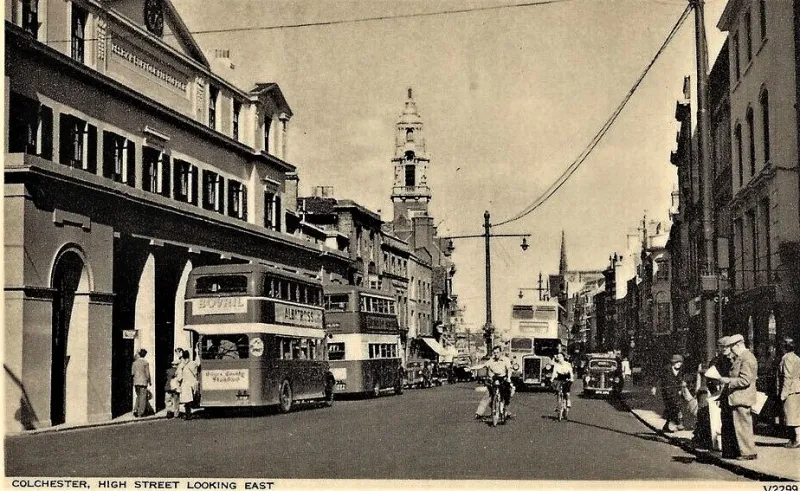
Photo: Art Graphics, CC BY-SA 4.0, via Wikimedia Commons
There is a particular kind of Colchester Saturday that begins with no plan at all and ends with a framed oil painting under your arm. Mine started on Crouch Street, in that grey November light that makes every shop window look slightly underwater. On a shelf between a jigsaw and a stack of paperback thrillers sat a small landscape: muddy greens, a smudged horizon, a sticker reading £8. It was not a masterpiece. It was not trying to be. But it was paint on board, done by a hand, and it had been sitting there for three weeks while people walked past it to look at the teacups.
That is the quiet appeal of charity shop art. It is affordable, yes, but it is also art with a past — somebody’s wall, somebody’s holiday, somebody’s aunt. You are not buying an investment. You are buying a small, slightly wonky piece of human decision-making, and in a town with as busy a creative undercurrent as Colchester, that is worth a morning.
The shelf where the good stuff hides
Charity shops rarely put art where you would expect. The good pieces tend to be on the floor, behind the till, or leaning against a bookcase in the back room because nobody quite knows where to hang them. Look low as well as high. Look behind the door. Ask. Volunteers are usually happy to tell you what came in this week, and in a town this size, the chances are they remember.
The cluster around Crouch Street and St John’s Street is a sensible starting point, with the High Street and the stretch up towards North Station Road adding a few more doors. Layer Road and Butt Road reward a longer walk. None of these shops is an art gallery, and that is precisely the point. You are browsing the same shelves as everyone else, with no private view and no guest list.
What actually gets donated
The volunteers I spoke to described a fairly consistent flow: framed reproductions, amateur watercolours, prints from old calendars, the occasional proper oil, and a great many things described on the label as “vintage”. House clearances are the big source. When a parent moves into care or a family home is sold, the pictures come down and often nobody in the family wants them. That is how a decent little etching ends up next to the bedding.
Local names do turn up. Colchester has a long tradition of keen amateur painters and a busy art society, so you will see signed pieces from people who exhibited locally, taught evening classes or simply painted every weekend for forty years. These are not necessarily valuable in the auction-room sense, but they are genuinely of the place. A watercolour of the castle or the Hythe, painted by somebody who knew the town, has more to say to me than a mass-produced print of a Venetian canal.
Reading a frame in thirty seconds
Start with the frame, then work inwards. A heavy old frame can hide a multitude of sins: damp board, torn mounts, a picture that has slipped. Turn it over if the shop allows. Brown paper backing that is peeling is not a disaster, but black mould spots are a warning sign. So is a smell of damp.
Check the surface in raking light — tilt it towards the window and look across the paint at a low angle. You will see scratches, flaking and the pale ghost of sun damage much more clearly than looking straight on. Watercolours fade. Oils can be cleaned, but that costs money, and a £8 painting with a £60 conservation bill is no longer a bargain.
Then look for a signature. It is often tucked in a bottom corner, faint pencil on the mount, or hidden under the frame edge. If there is a title or an edition number, read it. A print marked “1/50” is a limited edition; a print with no mark at all may be a reproduction. Neither is bad, but you should know which you are buying. If the mount covers the signature, ask whether you can slide it out gently. Most volunteers will say yes.
The £8 rule, and when to break it
My rule is simple: buy it if you would happily pay £8 to live with it for a year. That takes the pressure off. You are not trying to spot a lost Constable. You are asking whether the thing gives you a bit of pleasure on a Tuesday evening.
Break the rule when the piece is clearly local and clearly good — a named Colchester artist, a dated view of a street you know, a properly made print. Then pay what the shop is asking without haggling. Charity shops are not there to fund your collection. If you suspect something has been underpriced because nobody recognised it, say so to the manager. Many shops now check signatures and will reprice if they think a donation is worth more. That is not bad news for buyers; it is just fairer.
And do not become the person who buys a £8 painting, sticks it straight on an auction site and calls it a find. There is a difference between rescuing something overlooked and profiting from a volunteer’s guesswork.
A short route, and a reason to linger
If you want a gentle trail, start at the Crouch Street end, work towards the High Street, then loop back through St John’s Street and up towards North Station Road. Give yourself an hour. Look in the windows before you go in. Chat to the people on the counters — they are the best catalogue in town. Finish with a coffee and a proper look at what you have bought, because charity shop light is not gallery light and the painting will look different at home.
Colchester’s art scene is not only in firstsite or The Minories. It is also in the back rooms of charity shops, in the hands of volunteers who do not know what they have, and in the small, overlooked things that somebody once chose to hang on a wall. The £8 original is out there. It is probably leaning against a bookcase right now, waiting for somebody to tilt it towards the window.