Lights Left On: A Winter Window Walk Through Colchester's Town Centre
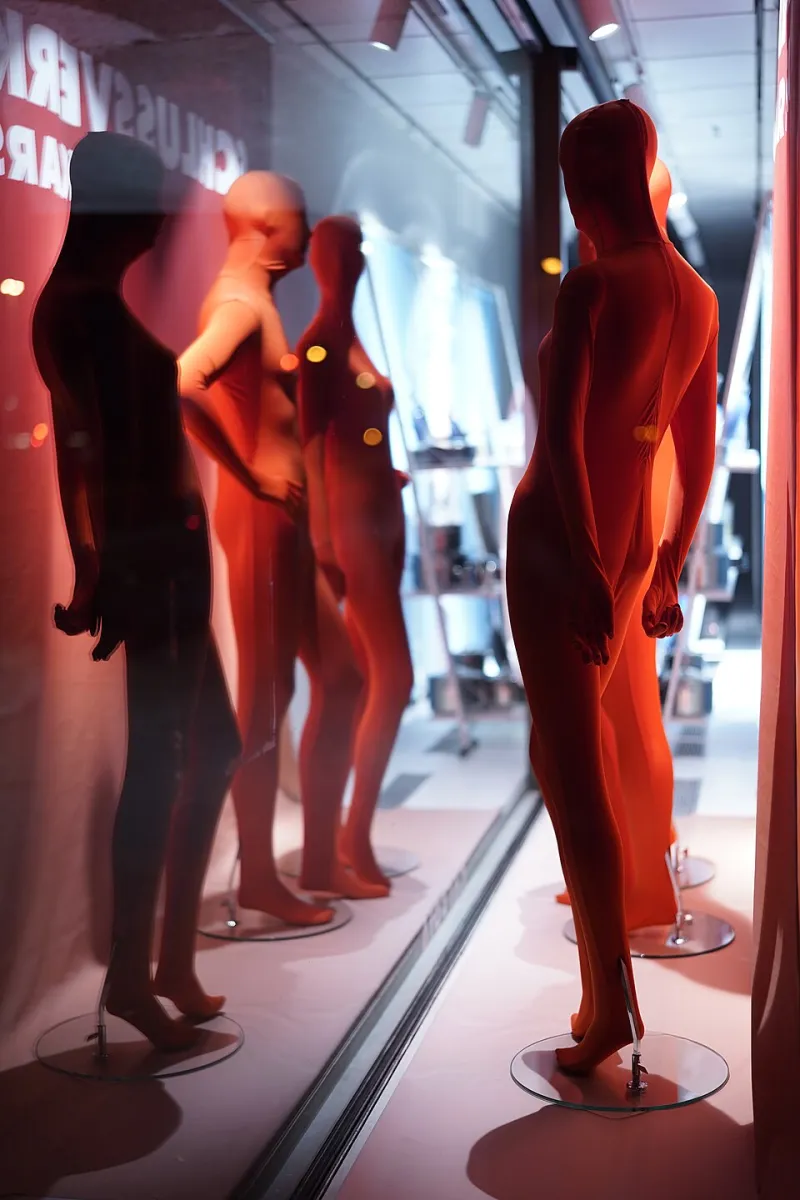
Photo: Tobias ToMar Maier, CC BY-SA 3.0, via Wikimedia Commons
There is a particular half-hour in Colchester, somewhere around four o'clock in November, when the town does something quietly clever. The shops are closing. The shutters come down with that metallic clatter you can hear halfway along Trinity Street. And then, instead of going dark, a good number of windows stay lit — and a fair few of them are showing something worth stopping for.
I walked a loop of the town centre on a damp Tuesday evening to see what was on. Not galleries. Not Firstsite, not the Mercury's foyer, not any of the places with a private view and a tray of warm white wine. Just windows. Doorways. The glass between the pavement and whatever is going on behind it.
It turns out there is quite a lot going on.
Why a Shuttered Shop Makes a Surprisingly Good Gallery
A shop window has advantages that a gallery would kill for. It is at eye level. It is lit properly, because the lighting was designed to sell things. It faces a street with actual footfall. And nobody feels they need to lower their voice or know the correct terminology before looking in.
There is also the accident of it. You do not go out intending to see art; you go out for milk, or to meet someone off the train at Colchester station, and a window catches your eye. That unplanned encounter is the whole point. Galleries ask you to make a decision. A lit window just happens to you.
The Route: Six Stops, Roughly Forty Minutes
Start where the town is busiest and work inwards. This is a loop, not a museum, so treat it as a wander rather than a checklist — displays change, and not every window is lit every night.
1. The top of the High Street. The big panes near the Castle Park end often carry the most ambitious things: a single painting on an easel, a run of prints on a shelf, a bit of seasonal dressing that has quietly become an installation. Look up as well as in; some of the best-lit windows here are on the first floor.
2. Culver Street and Lion Walk. The precinct windows are the most generous to a passer-by, because the sightlines are long and the lighting is flat and even. Café displays do well here — a rotating set of small works above the tables, visible from the pavement long after the coffee machine has been switched off.
3. Eld Lane and the lanes behind. This is where the smaller, stranger things live. A studio front with a half-finished canvas propped against the glass. A rack of hand-printed cards. Someone's ceramic experiments on a windowsill with a handwritten note beside them. Peer in and you can sometimes see the actual messy business of making, which is its own kind of exhibition.
4. Scheregate Steps and the Dutch Quarter. Narrower streets, warmer light. The windows here are small and domestic in scale, and the work tends to match — textiles, small paintings, the kind of thing you can imagine on your own wall.
5. St Botolph's and the edge of the town centre. A good place to finish, because the streets are quieter and you can take your time without a queue forming behind you.
6. The walk back. Come back along Head Street or North Hill and you will notice things you missed on the way out. This is not a failure of the route; it is the route working.
What the People Behind the Glass Actually Get Out of It
I asked a few of them. The answers were refreshingly unpretentious.
A café owner on Eld Lane told me she started putting work up because the wall above the banquettes was blank and a regular asked if she could hang a few pieces. Now it is a standing arrangement, changed every couple of months, and the window stays lit until late. "It makes the street feel less shut," she said. "That's mostly why I do it."
A painter with a studio front near the Dutch Quarter was blunter. "It's free shopfront," he said. "I'm not going to pretend it's a gallery strategy. But people knock on the door because of what they saw through the window, and that's more than I'd get from a website."
And a shopkeeper on Culver Street pointed out something I had not considered: the display is often arranged by whoever is closing up, at the end of a long day, with one eye on the clock. It is not curated. It is not lit by a technician. It is a person moving a few things around so the window looks less empty tomorrow morning. That is, in its way, quite charming.
The Unwritten Rules of Pavement Looking
A few things I have learned, offered without any authority whatsoever.
- Look, don't linger oddly. Two or three minutes is fine. Standing nose-to-glass for ten starts to feel like an incident.
- Do not tap the window. This should not need saying. It does.
- Assume nothing is for sale unless there is a sign. Plenty of these displays are decorative, or the artist's own, or a staff member's. If you want to know, go back when the door is open and ask.
- Bring a coat with a hood. This is Colchester in winter. The route is only as pleasant as the weather allows.
- Check before you make a special trip. Some windows go dark after six; some stay lit until ten; a few are lit all night. There is no central timetable, which is part of the charm and also part of the frustration.
What It Does for a Town After the Doors Lock
There is a conversation that recurs whenever anyone talks about Colchester town centre — about footfall, about empty units, about what happens after five o'clock. This window trail is not an answer to any of that. It is far too small, far too ad hoc, and it depends entirely on the goodwill of people who are already tired and already closing up.
But it is evidence of something. It shows that the desire to put things where other people can see them does not disappear when the shutters come down. It just moves into the glass.
And on a cold evening in November 2026, walking a loop of your own town with your hands in your pockets, that is more than enough reason to slow down outside a café you have walked past a thousand times and never once looked into.
Go at about half four. Take your time. Let the town show you what it leaves on.