The Free Gallery on Colchester’s Streets: A Walking Route for Murals, Paste-Ups and Painted Corners
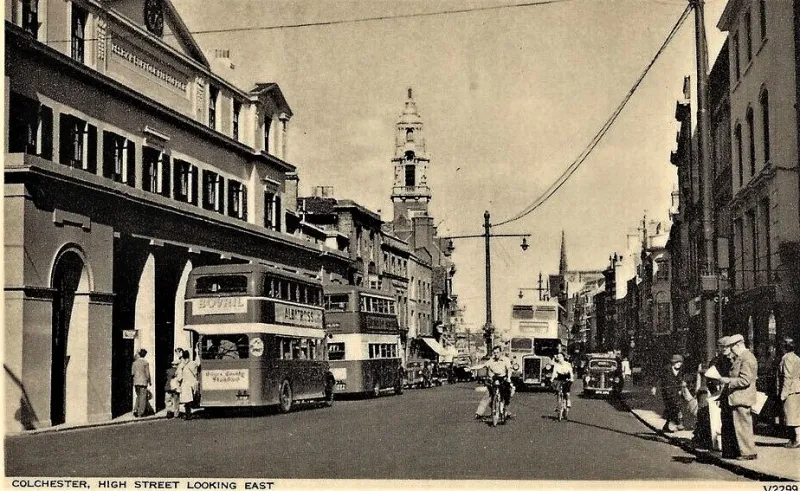
Photo: Mark Crombie, Public domain, via Wikimedia Commons
Street art in Colchester doesn’t announce itself. It turns up on the back of a shop, along a service lane, beside a wheelie bin, halfway up a wall you’ve walked past a hundred times. That is part of the pleasure. The city has a free, everyday gallery, and it is open at all hours. You just have to slow down enough to notice it.
This route is a starting point rather than a fixed trail. Pieces come and go, shutters get repainted, paste-ups curl at the edges, and new work appears in the gaps. Treat it as a reason to wander the city centre with your eyes up, and you’ll find your own painted corners along the way.
Start where the city shows off: Firstsite and Castle Park
Begin at Firstsite, not because the street art is inside, but because it is a good place to reset your eyes. Leave the gallery, cross towards Castle Park and follow the edges rather than the middle. The park’s boundary walls, gates and paths have long been a backdrop for public creativity, and the Roman wall gives the whole area a strange, layered feel. Here you are looking for small interventions: a stencil on a utility box, a painted panel on a hoarding, a paste-up that looks like it has been there for years.
Morning is the best time. The light is softer, the pavements are quieter, and you can take a wide shot without a stranger walking through the frame. It is also the time when you are most likely to see someone repainting a shutter or pasting a new piece into place. If you do, give them space. Watching is fine; crowding is not.
Into the Dutch Quarter
Head north into the Dutch Quarter, where narrow streets and painted doors make the area feel like a small village inside the city. This is prime paste-up territory. Look at eye level, then just above it, and then lower down near the skirting of shopfronts. Bus stops, meter boxes and recessed doorways are all likely spots. The work here often has a gentler, more handmade feel: paper cut-outs, small illustrations, text pieces that reward a second look.
The stories behind these pieces are usually local. A shopkeeper who wanted a brighter wall. An illustrator testing a new character. A group of friends marking a birthday or a gig. Street art in a city like Colchester is rarely about grand statements. It is about people claiming a bit of the everyday streetscape and making it feel more like theirs.
Queen Street, Eld Lane and the lanes between
Cut back towards the centre and weave through the lanes around Queen Street and Eld Lane. This is where you find shutters, service bays and the backs of buildings that most of us never really look at. A mural on a shop shutter only exists when the shop is closed, which makes it a nice early-morning or Sunday discovery. Look for signatures, dates and small details in the corners. Artists often leave a handle or a mark, and that is your clue to look up their other work.
Not every painted wall is a sanctioned commission. Some are legal murals, some are tolerated, and some are not. That is not for us to judge on a walk. The important thing is to treat all of it with care. You are a guest in someone’s workplace, neighbourhood or property. Keep your voice down, don’t move bins or barriers, and don’t assume a wall is public just because you can see it from the pavement.
Scheregate Steps and the High Street edge
Make your way towards Scheregate Steps and the edges of the High Street. Steps and underpasses attract layers: tags over older pieces, stickers on railings, paint on concrete. It can look messy at first, but that is part of the form. Street art is not a finished object in a frame. It is a conversation that keeps getting interrupted.
Look for dates. A piece from 2024 sitting under something from 2026 tells you how quickly this gallery changes. Look for repairs, too. A patch of fresh paint over a torn poster is a small record of someone deciding what stays and what goes. End your walk at Balkerne Gate if you can, where Roman masonry and modern paint share a postcode. It is a good reminder that Colchester has always been a place where old and new are stacked on top of each other.
How to spot pieces before they change
Street art is temporary by design. Paste-ups fade in the rain, shutters get repainted, and building work removes walls without warning. If you want to catch a piece before it goes, follow local artists and Colchester art accounts online. Search for the city’s street art hashtags before you set out. Ask in independent shops if they know of anything new. Word of mouth is still the best map.
When you find something, take two photographs: one wide shot that shows the wall and its surroundings, and one detail shot of the artist’s mark or the best part of the image. Note the date and the location. This is not just for your own archive. It helps everyone understand how quickly the city’s walls are changing.
A short etiquette guide for photographing and sharing
- Do not touch wet paint or paste-ups. Even dry work can be fragile.
- Do not peel, scrape or remove anything, even a flaking corner.
- Ask before photographing people, especially if they are the artist at work.
- Credit the artist when you can. If there is no signature, say that you don’t know rather than guessing.
- Do not block pavements, roads or shop entrances while you frame a shot.
- Avoid flash in narrow lanes and covered passages. It flattens the work and irritates passers-by.
- Do not climb bins, walls or railings for a better angle.
- If you want to use a piece in a commercial post or product shoot, ask first. Public visibility is not the same as free commercial use.
- Share locations thoughtfully. A busy crowd can damage a fragile piece or annoy residents.
Make a day of it
This route works best as a slow wander rather than a checklist. Stop for coffee. Look in the windows of independent shops. Pop into Firstsite or the castle. The point is not to tick off every mural in Colchester. The point is to remember that the city’s walls are always talking, and that you can listen for free.
If you find something new on your walk, tell Colchester Art. The city’s street art scene is small enough that a good tip can help someone else catch a piece before it changes.