Pigment, Paper and the People Behind the Counter: Where Colchester Artists Really Shop
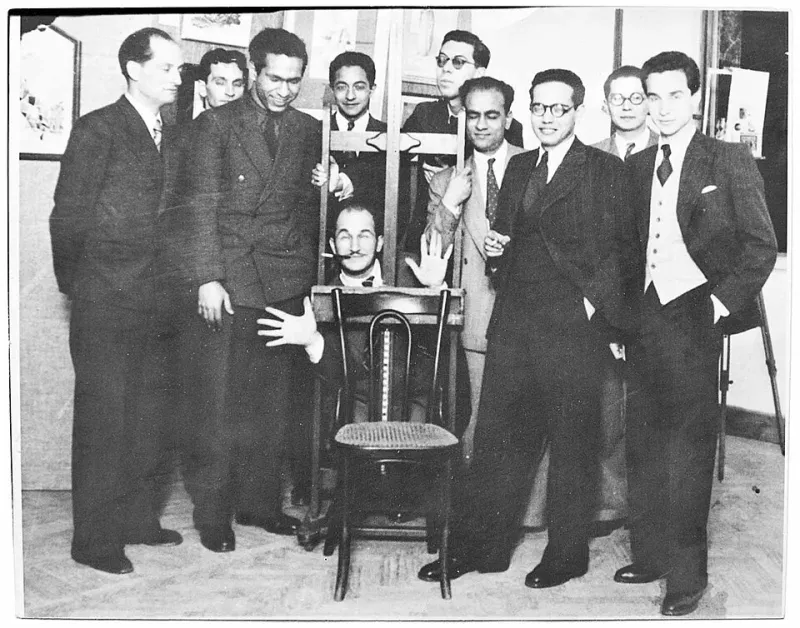
Photo: The Younan Family Archive, Public domain, via Wikimedia Commons
It is a damp Saturday in November 2026, and the queue at Paper & Grain is three deep. A student is weighing up two sheets of Saunders Waterford. A retired printmaker is asking whether the new Bockingford has changed. Behind the counter, Maya is doing what independent art shops do best: answering the question behind the question. 'People come in for one tube of paint,' she says, 'and leave knowing why their last sky went chalky.'
That is the thing about buying art supplies in Colchester. The chains will sell you a canvas and a brush, and there is nothing wrong with that. But the town's independent counters — the framers, the pigment rooms, the recycled-studio corners — are where you get the knowledge, the single sheet, the odd size, the offcut that saves a project. They are also where the local art scene keeps its gossip, its spare easels and its memory of who teaches what.
Paper & Grain, off Short Wyre Street
Maya runs Paper & Grain with her brother, and the shop has the slightly delicious clutter of a place that knows its stock. There are loose sheets of Fabriano, Saunders Waterford and Bockingford, plus a drawer of Japanese papers that a bookbinder from Hythe keeps topped up. The offcuts bin is the quiet hero: a pound a sheet, or fill a bag for a fiver, and half of Colchester's sketchbooks are probably made from it. 'We get a lot of people who have never bought proper paper before,' Maya says. 'They want to know if it will take a wash. We can spray a corner and show them. The chain cannot do that.'
For painters, the draw is the single-sheet policy. You can buy one sheet of good paper rather than a pad you will never finish. There is also a student discount on Tuesdays, a box of cheap brushes by the till and a noticeboard by the door that is worth reading: life models, shared studios, a call for volunteers at a community mural.
The Pigment Room, near St John's
The Pigment Room is smaller, and smells of linseed and coffee. Michael, who has run it for eleven years, keeps a tight range of artist-quality oils, acrylics and watercolours, including tubes that the big shops in town do not bother with: a proper cadmium, a genuine Naples yellow, a gouache that does not fight back. 'If someone is painting a portrait and they need one colour,' he says, 'I would rather sell them one good tube than four bad ones. That is the whole business.'
He also runs a Saturday morning colour-mixing table, free with any purchase, where people bring in a photograph and try to match a sky or a brick wall. It is the kind of thing that sounds gimmicky until you watch a nervous beginner realise that mixing is a skill, not a secret. Artists mention Michael for two reasons: he will tell you honestly if a product is not worth the money, and he will order in a colour if you ask nicely.
Re:Frame on North Hill
Framing is where a lot of artists quietly spend their money, and Re:Frame is the name that comes up most often among printmakers and photographers. The shop keeps mount board offcuts in a rack by the window — a few pounds each, and ideal for small editions — plus ready-made frames that are cheaper than a custom job but better than the supermarket. Lena, a printmaker who shows at local open studios, says she uses the offcuts for 'the bits between the good prints'. 'I can make twenty small mounts for the price of one bespoke frame,' she says. 'And they will cut a window while you wait if they are not busy.'
The real value is the advice. If you turn up with a wet canvas or a wonky paper edge, they will tell you what will actually work, not just what will sell. There is an artist rate on larger framing jobs, and a box of recycled frames near the back for anyone putting on a first show.
Castle Offcuts and the recycled-studio corner
Not every supplier is a shop. Colchester has a small but useful trade in secondhand easels, donated paints and studio clear-outs. Castle Offcuts, which began as a table at a local art market, now has a corner in a shared studio near the Hythe. You might find a decent studio easel for £30, a bundle of brushes for £5, or a half-used tube of paint that someone has finally admitted they will never use. It is not the place for a specific colour on a deadline, but it is the place to go when you are setting up a first workspace or trying a new medium without spending £100.
Ellis, who runs it with two friends, says the stock is unpredictable by design. 'We get a lot of people who are clearing out a parent's art room,' he says. 'They would rather it went to someone who will use it than to a skip.' The corner also takes donations, and the money goes back into cheap materials for local workshops.
What the chains cannot stock
The obvious answer is specialist knowledge, but the practical answer is smaller quantities and stranger sizes. Independents will sell you one sheet, one tube, one metre of canvas, one mount. They will let you feel the paper. They will remember that you prefer a soft pencil. They will tell you that the cheap brush is fine for underpainting and the expensive one is not magic. That is not a small thing when you are learning.
They also keep the local scene visible. The noticeboards, the flyers by the till, the conversations between customers — that is how a lot of people find their first life-drawing class, their first studio mate, their first exhibition. A chain store can sell you the materials for a creative life. These counters are part of the life itself.
A small Saturday circuit
If you want to support them, you do not need a grand plan. Start at Paper & Grain for paper and a look at the noticeboard. Walk to The Pigment Room for a tube of something you have been putting off buying, and ask Michael what he would use. Stop at Re:Frame if you have anything waiting to go on a wall. Then head to Castle Offcuts if you are setting up, clearing out or just curious. Buy one thing you actually need, not three things you feel guilty about. Tell them what you are making. That is how these places stay open.
In November 2026, with so much of life moving online, there is something quietly radical about a shop that will let you test a paper before you buy it. Colchester's art scene is not just made in studios and galleries. It is made at these counters, one sheet and one conversation at a time.