The Long Afterglow: Colchester’s 2026 Art Year Through Six Pairs of Eyes
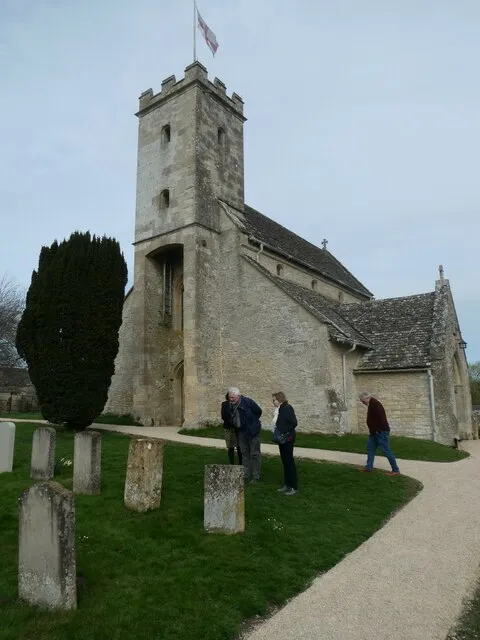
Photo: Basher Eyre , CC BY-SA 2.0, via Wikimedia Commons
Year-end lists usually arrive with trumpets and a scoreboard. This one arrives with tea, a folded programme and a bit of hesitation. With the year already tipping toward its darker afternoons, we asked six Colchester people — artists, a curator, a gallery volunteer and one committed gallery-goer — to nominate a single local exhibition or artwork from 2026 that has stayed with them. Not the biggest. Not the best. Just the one they keep returning to in their heads.
The result is not a ranking. It is a set of afterimages. Some are grand, some are almost too small to explain. All of them say something about how people in Colchester look at art made in Colchester: closely, generously and with an eye for the thing that was almost missed.
A bowl with a thumbprint in it
Ruth Bell, a ceramicist who works from a shed at the bottom of her garden, nominates a single unglazed bowl from the Colchester Potters’ Circle members’ show at Slack Space in spring 2026. She cannot remember the maker’s full name. She remembers the bowl.
‘It was sitting slightly apart from the rest, as if it had wandered off,’ she says. ‘There was a thumbprint near the foot, not hidden, just left there. I kept thinking about how much courage that takes. You spend years learning to make things smooth, then you have to learn to leave the evidence.’
What stayed with her was not the object alone but the room around it: the folding tables, the hand-written labels, the stewards who knew every maker by first name. ‘It reminded me that a show doesn’t have to be polished to be serious,’ she says. ‘Sometimes the seriousness is in the fact that everyone turned up.’
The corridor that became a room
Imani Okafor, a curator who has worked on small-scale projects across the town, chooses Tom Mercer’s corridor installation at The Minories, part of a 2026 programme of short shows. Mercer lined the passage with pale prints and a single low bench, turning a space people usually hurry through into somewhere they paused.
‘It was not dramatic,’ Okafor says. ‘That was the point. You could hear your own footsteps change. People started talking to each other because there was nowhere to rush to.’ She remembers a couple who came in for the shop and left twenty minutes later having discussed the prints with a stranger. ‘That is curation, really. Not arranging objects, but arranging time.’
She mentions the labels too — brief, warm, not over-explaining. ‘They gave you enough to start, then got out of the way. I have thought about those labels more than some blockbuster exhibitions.’
A painting that refused to tidy itself away
Gareth Loom, a painter who teaches part-time, nominates a canvas from the Colchester School of Art degree show in June 2026. The painting, called ‘The Bus That Never Came’, showed a bus stop at dusk with a figure half in and half out of the frame. He saw it on a hot afternoon when the studio was full of families and paper cups.
‘It was not neat,’ he says. ‘The paint was still arguing with itself. But it had that thing where you can feel the artist deciding in front of you. I went back three times. The third time, the maker was there, and I almost didn’t say anything. I’m glad I did. We ended up talking about waiting — for buses, for paint to dry, for confidence.’
For Loom, the lingering quality is not technical polish but honesty. ‘You can teach someone to draw a bus stop. You can’t teach them to leave the figure unresolved because that’s how it felt. That student already knew something.’
The tiny print in the stairwell
Sophie Nunn, who volunteers at Cuckoo Farm Studios’ open weekends, picks a small etching tucked into the stairwell during the 2026 open studios. It was by a maker she had never heard of, pinned slightly crookedly above the fire notice.
‘Everyone was downstairs eating cake,’ she says. ‘I went up to escape the queue for the loo and found this tiny print of a gate in Castle Park. It was so quiet. I stood there for ages. Then someone came up and said, “Oh, that’s mine,” and looked embarrassed. I told them it was the best thing I’d seen all day. They looked at me like I was being kind. I wasn’t.’
Nunn says the moment changed how she visits open studios. ‘I stop looking for the big room now. I look in the corners. The stairwells. The bits where people put things because they’ve run out of wall. That’s often where the real show is.’
The workshop that left the door open
Dev Patel, a printmaker who runs occasional workshops at Patch, nominates a community collage wall made at Colchester Library in 2026 as part of a local arts trail. It was not a formal exhibition: just a long sheet of paper, pots of glue and an invitation to add something.
‘I went in to return a book and came out an hour later with glue on my sleeve,’ he says. ‘There were kids cutting out castles, a woman drawing her dog, someone adding bus tickets. It was messy and sincere. No one was trying to be an artist. That’s why it worked.’
He remembers a small boy carefully sticking down a drawing of a dinosaur in a Colchester United shirt. ‘I think about that dinosaur more than I think about some gallery shows. It was art doing what art is supposed to do — making a place feel like it belongs to the people in it.’
The wall that made people late
Margaret Hine, a committed gallery-goer who keeps a notebook of every show she visits, nominates a window piece on Culver Street by Nadia Cole, installed for a fortnight in autumn 2026. It was made of cut paper and old maps, lit from behind, and it changed colour as the afternoon went on.
‘I walked past it four times before I realised it was art,’ Hine says. ‘I thought it was a shop display. Then I saw the little label in the corner and felt stupid, then delighted. I stood there so long a man asked if I was all right. I said I was just waiting for the light to change.’
She likes that it asked nothing of her. ‘No ticket, no queue, no pressure to understand. Just a thing in a window that made the street look different. I went back the next day with my neighbour. She said it looked like a map of somewhere we hadn’t been yet. That’s a good review, I think.’
Why these nominations matter
The six choices do not add up to a tidy summary of 2026. They are too personal for that. But they share a thread: each one is about attention. A thumbprint left visible. A corridor made slower. A painting that admitted it was still deciding. A print in a stairwell. A collage wall with glue on the table. A window that made someone late.
None of these things require a grand venue or a large budget. They require someone to put the work where people might find it, and someone else to stop. That is the quiet engine of Colchester’s art scene — not a single building, but a habit of looking.
If this year-end roundup sends you anywhere, let it send you back to the small rooms. Check opening hours before you go, because volunteers run many of these places and their generosity has limits. Look in the stairwells. Read the labels. Say something kind to the person who made the thing. The afterglow is not in the list. It is in the returning.