Castle as Canvas: A Beginner’s Field Guide to Drawing Colchester Outdoors
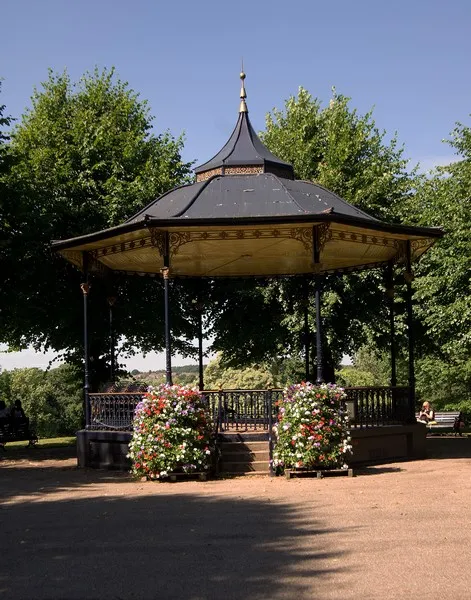
Photo: Jim Osley , CC BY-SA 2.0, via Wikimedia Commons
Colchester Castle is usually talked about as a place to take visitors: pay your entry, climb the keep, admire the Roman foundations, buy a pencil in the shop. Fair enough. But there is another way to use it, and it costs nothing. Treat the castle grounds, the park around it and the older streets nearby as an open-air studio. On a bright November morning in 2026, with the low sun catching the flint and the last leaves coming down, it is hard to think of a better place in town to draw.
This is not a guide for people who already own a folding easel and a colour wheel. It is for anyone who has looked at the castle and thought, I would not know where to start. Start small. Start badly. Start on a bench. The town has been sitting for sketches for two thousand years; it can wait for yours.
Why the castle grounds work so well
A good outdoor subject needs three things: something big to anchor the drawing, something middle-sized to give it rhythm and something small to stop it feeling dead. Castle Park offers all three in one view. The keep gives you mass and shadow. The trees, railings, benches and paths give you rhythm. People walking through, feeding pigeons or eating lunch give you the small moving bits that make a sketch feel alive.
There is also the joy of layers. From the park you can see the castle, Hollytrees Museum, the war memorial and bits of the old town all in the same sweep. Turn a few degrees and you have the Roman wall, a Georgian roofline, a modern lamppost. For a beginner, that means you can spend a whole morning in one spot and still find a different drawing every hour.
What to pack, and what to leave at home
Keep it light. A5 or A4 sketchbook with paper that can take a light wash, two graphite pencils (HB and 4B are plenty), a fineliner, a kneaded eraser and a small water brush if you like tone. Add a folding stool if you have one, but a bench is fine. In November, pack layers, fingerless gloves and a flask. Cold hands make loose drawings, which is sometimes a gift and sometimes a mess.
Leave the giant easel at home unless you have checked that it will not block a path. Leave wet oils and anything that needs turpentine; this is a public park, not a studio. Leave the idea that you need expensive paper. A cheap cartridge pad and a pencil will teach you more about the castle than a beautiful leather-bound book you are scared to open.
Timing the light
The castle changes through the day. Early morning is quiet and the shadows are long, which makes the stonework look dramatic. Midday flattens everything, but it is useful for detail and for drawing people who are sitting still over coffee. Late afternoon in November goes quickly, so check sunset before you set up. The low winter light can turn the park gold for about twenty minutes and then it is gone.
Weekdays are calmer than weekends. If there is an event in the park, sketch the event instead of fighting it. And do check the castle opening times if you want to draw from inside the grounds or use the toilets; the park itself is the free bit.
Local etiquette for drawing in public
Colchester is a friendly town, but a sketchbook does not give you permission to get in the way. Keep paths clear. Do not set up in front of doors, steps or signs. Ask before you draw someone close up, especially children, and accept a no without making it weird. Do not draw on walls, stones or monuments. Take your litter home, including pencil shavings and used tissues.
If you are in the Dutch Quarter or around the Roman wall, remember that these are streets where people live. Stand to one side. Do not peer into windows. If someone asks what you are doing, tell them; most people are pleased. One local sketcher I know carries a few postcard prints of her work and gives them to curious children. It is a good way to turn a stranger into a supporter.
Where to go after the castle
Once you have done a few castle sketches, walk five minutes in any direction. The Dutch Quarter gives you crooked roofs and quiet corners. St Botolph’s Priory offers ruin and sky. The Roman wall is a lesson in drawing something very old and very ordinary at the same time. Castle Park itself has bandstand, benches, bridges and water. Even the bus station can be a subject if you like people and movement.
The trick is to return to the same view in different weather. Draw the castle in sun, in rain, in fog. Draw it with a crowd and without. That is how you learn a place, and it is how the castle stops being a backdrop and becomes your subject.
Voices from the sketchbook
A Colchester illustrator who draws the castle most weeks told me that the building is forgiving. 'It is big enough that you can get it wrong and it still looks like the castle,' she said. 'That is why it is good for beginners. You are not trying to capture a face. You are trying to capture a feeling of weight.'
Another regular, a retired teacher who sketches in the park on Tuesday mornings, said the hardest part is sitting still long enough to see. 'People rush. I used to rush. Now I draw one arch and one tree and I go home. That is a whole morning well spent.'
Start with one thing
If you take nothing else from this, take the permission to be a beginner in public. Choose one arch, one tree, one lamppost. Give it twenty minutes. If it goes badly, turn the page and draw the same thing again. The castle has been drawn by people with quills, people with charcoal and people with biros on the back of a leaflet. Your pencil is welcome.
And if you see another sketcher on a bench this autumn, say hello. Colchester’s best outdoor studio is closer than you think, and there is room on the bench.