The Clipboard and the Canvas: A Colchester Open Exhibition Hand-In, Minute by Minute
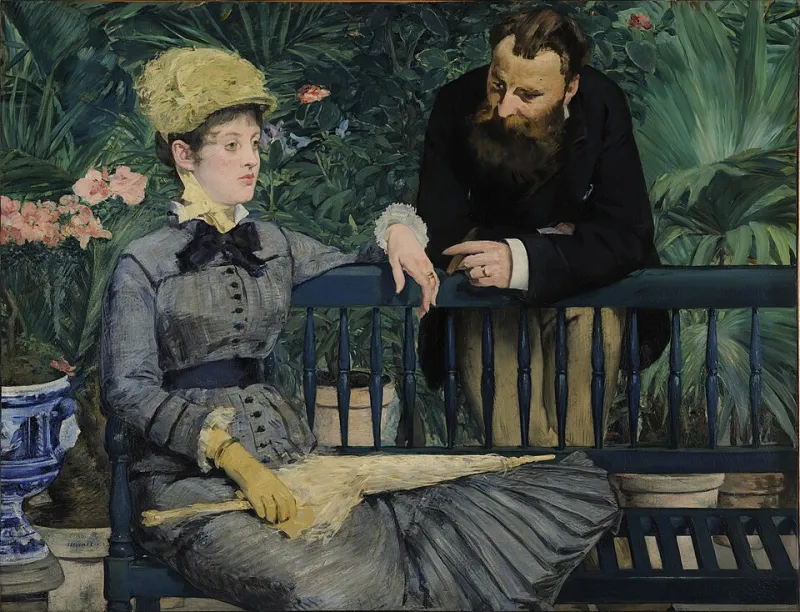
Photo: Édouard Manet, Public domain, via Wikimedia Commons
At ten past nine on a grey November morning, the queue outside the community gallery is already doing that very Colchester thing: half patient, half quietly panicking. A woman in a paint-flecked fleece balances a canvas against her hip while scrolling for the confirmation email. Behind her, a man in a cycling jacket has strapped a framed watercolour to his back like a rucksack. Nobody is quite sure whether the doors open at nine-thirty or ten. The volunteer on the step knows, though. She has a clipboard, a high-vis tabard and the calm of someone who has done this before.
This is hand-in day for a local open exhibition — the unglamorous, oddly sociable morning that comes before the hanging, the labels and the private view. It is not the art itself, but it is part of the town’s creative conversation all the same.
Before the doors: the pavement edit
Open calls ask for work by a deadline; hand-in day asks for it in person. That difference matters. On the pavement, you see the rehearsal. A printmaker unrolls a tube, checks for dents, rolls it back up. Two friends compare mountboard corners under the streetlight. Someone’s partner is dispatched back to the car for a forgotten hanging wire and returns at a jog, slightly triumphant.
The queue also does a quiet job of editing. A painting that looked bold in the spare room can look enormous next to somebody else’s A4 etching. A frame that seemed fine at home acquires a suspicious rattle. People lean in, not to judge, but to check: is that bubble wrap actually protecting the surface, or just making a good noise?
By the time the doors open, the queue has become a small, temporary club. Nobody has admitted to being nervous, and everybody is.
At the table: forms, labels and the friendly inquisition
Inside, the gallery has been rearranged. The first table is paperwork: a printed list, a box of pens that mostly work, and a volunteer who asks your name, your title, and whether you have read the conditions of entry. The last question is delivered kindly, but it is not rhetorical. Open exhibitions run on small print: size limits, hanging methods, whether wet paint is allowed, whether the work is for sale.
Then comes the label. Not the final gallery label — that is a later job — but the hand-in slip that ties the artwork to the artist. It is usually a small card or sticker with a number, a title and a contact detail. It is also, in its way, the moment the piece stops being yours alone. Once that number goes on the back, the work has entered the show’s system.
A volunteer in glasses holds up a canvas and asks, “Is this the top?” It is not a silly question. More than one painting has been hung upside down in the history of open exhibitions, and nobody wants to repeat the experiment.
The rack: where paintings go to wait
The storage rack is the quiet heart of hand-in day. It is usually a set of padded uprights or a temporary shelf behind a curtain, and it fills up fast. Canvases go in face to face. Frames are slotted in with the care of library books. A sculptor’s small plinth piece is given its own corner and a note that says, in capital letters, DO NOT STACK.
This is where the morning’s practical generosity shows. A volunteer notices that a frame is loose and finds a screwdriver. Another takes a painting back to the table because the hanging wire is too low. Someone’s dad is talked through the difference between a D-ring and a sawtooth hanger, and leaves having learned something he did not expect to learn before lunch.
Nothing is being curated yet. The selectors, if there are selectors, will come later. For now, the rack is just a holding pen for hope and hard work.
Last-minute framing (and other small dramas)
There is always a small drama. This year it is a pastel drawing with a smear near the corner, spotted under the gallery’s brighter lights. The artist is philosophical. “It’s been like that since Tuesday,” she says. “I’ve decided it’s part of the piece.” The volunteer nods, writes a note, and does not argue.
Another artist has brought work in a frame so large it has to be carried in sideways through the fire door. Two strangers hold the door, a third guides the corner, and for a moment the entrance becomes a small team sport. It is the sort of unplanned kindness that makes these shows feel like they belong to the town rather than just the gallery.
By half eleven, the clipboard has a full page of ticks. The rack is crowded but orderly. The bubble wrap is folded into a pile by the bin, ready to be reused. The queue outside has gone.
Practical notes if you are entering a 2026 open call
If you are preparing work for an open exhibition in Colchester this year or next, the hand-in morning will be easier if you treat it as part of the process rather than an admin afterthought.
- Read the entry conditions twice. Check size limits, hanging requirements and whether the gallery wants the work framed, unframed or mounted.
- Label the back of the work clearly, including the top. Use a pencil if the surface is delicate.
- Bring your own hanging wire and D-rings if the call allows it. A small screwdriver in a coat pocket has saved more than one morning.
- Wrap work properly, but be ready to unwrap it at the table for inspection. Bubble wrap is fine; a bin bag is not a substitute for a frame.
- Allow time. The queue is part of the day, and the volunteers are not paid to rush you.
- Keep the confirmation email on your phone, but do not rely on signal. A printed copy in your bag is old-fashioned and useful.
The quiet generosity
What stays after the paintings go on the rack is not the anxiety about selection. It is the small, steady generosity of the people who run these mornings: the retired steward who has been doing this since the old library shows, the gallery assistant who knows where the spare screws are kept, the artist who holds the door for a stranger with a bigger frame than hers.
Open exhibitions are often talked about in terms of what gets in and what does not. Hand-in day is a reminder that the conversation starts earlier than that, on a pavement in November, with a clipboard and a bubble-wrapped canvas and a volunteer saying, “You’re all right, love, bring it in.”